SSSAD X TRANSCRIPTS
TIANYU X CHRISTIN
“I was almost going to forgo the interview entirely because I felt an aching feeling of isolation and abandonment from folks around me that lingers still. I chose Tian to interview because she struck me as someone who cares so very deeply about the world and those around her. I was curious about the air of confidence and rebellion—of fire—about her, and I wanted to know how someone who feels and cares so much navigates being queer, trans, “Asian,” and “American” (or just “American”) amidst US-driven genocide, fascism, militarization, and eugenics; and, more specifically, how she goes about organizing and solidarity work in spite of it all.”
- christin
she/her

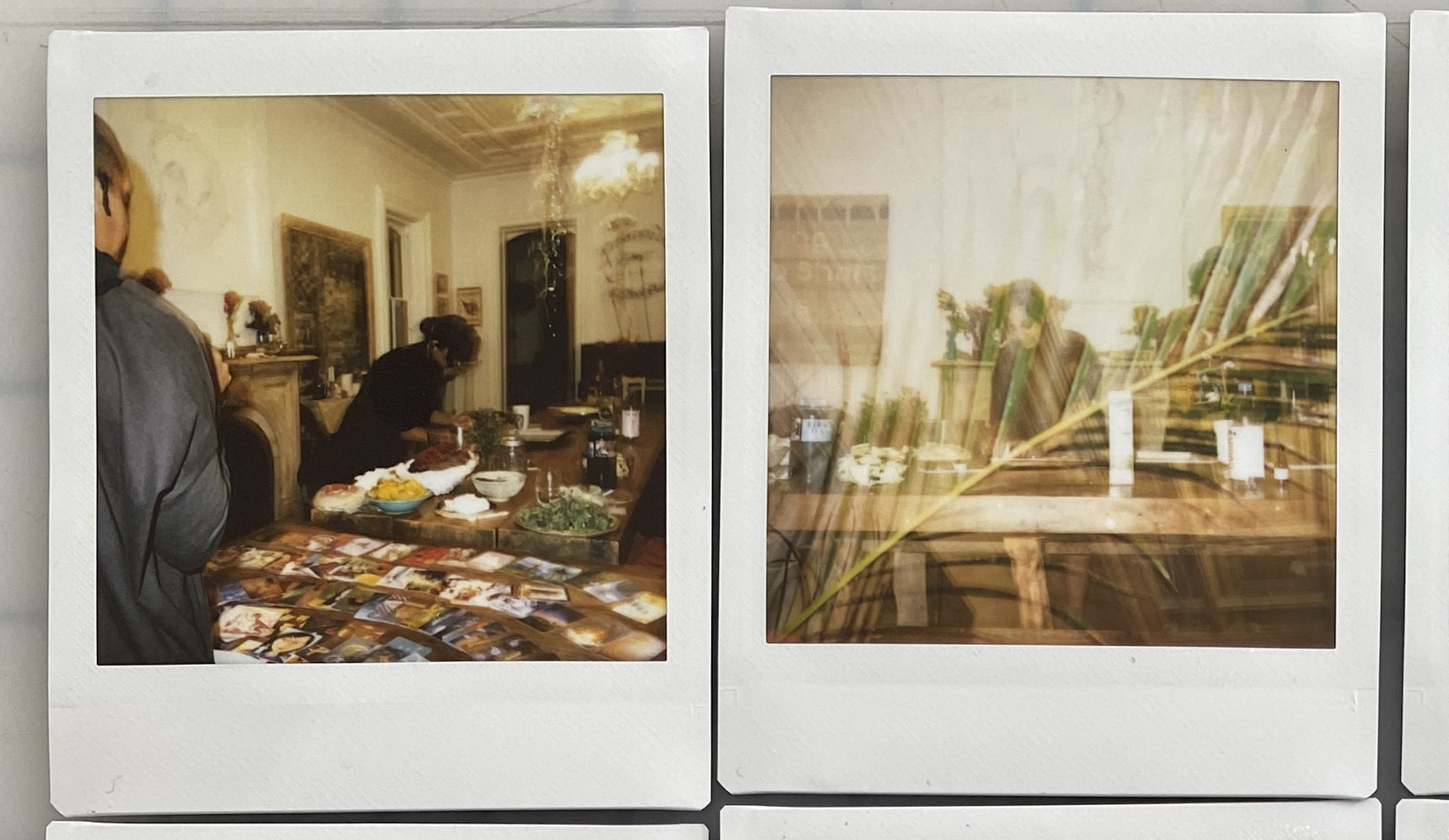


This transcript has been edited for clarity.
christin hu (ch): This is christin, and I’m here with Tian for Storytelling Spaces of Solidarity in the Asian Diaspora. That’s our little intro. And the first question I wanted to ask was just if you could share a little bit about your experience growing up as Asian American or Asian in America.
Tianyu Yi (TY): I grew up in Arkansas, which was a pretty specific experience, but also I experienced a lot of hallmarks of middle-class, second-generation, and Chinese-American-in-Middle-America experience. My family immigrated to the US in ‘91, and I was the first person in my family born in the US, and that definitely had a very big impact on my experience relative to my older brother, who is eight years older than me and had to obtain his citizenship when he was twenty—and that was a really long and difficult process for him and my parents, of course, whereas everything was much easier for me. Also, my class status was much more comfortably middle class, upper middle class throughout my life, whereas when my family moved to the US and my brother was there, they spent a much longer period of time financially struggling.
So that was a really crucial determinant of the specific kind of archetype of Asian American experience I had. I grew up in an upper-middle-class white suburb in Arkansas and also in a very, very Christian community. Not only the wider sort of Arkansan context but also the Chinese community that my family was really firmly rooted in was almost entirely Christians.
That’s sort of the broader strokes, I think, of my Asian American experience. Because of my class status, I was able to go back to China much more often than most people. I could go visit my extended family, who are almost all in Wuhan, every two years, every two summers. I spent three months every two years with my family over there. So that meant that I felt, I think, a much closer connection to China than a lot of my peers did. And also that my language skills were much more developed. I was speaking Chinese at home, could understand, could sort of read. So those are important factors, and I had a very close relationship to my extended family as a result in a way that I think a lot of Asian American kids who don’t have the financial ability to go back often, a lot of them, lack.
ch: I was able to go back maybe once every five or seven years, and I know there’s always the WeChat, family WeChat kind of thing, and I kind of only really joined a family WeChat maybe in 20—I don’t even know if I did in 2012—I think it was even after that.
TY: It’s permanently muted for me, both of them.
ch: (laughs) I mean, I don’t understand anything that is going on inside of them!
TY: My mom’s always scolding me. She’s like, “Why didn’t you respond to this thing that got said in the family group chat?” I was like, “I didn’t see it—”
ch: Everything that gets sent is, I don’t know, these really cheesy graphics of New Year’s or holidays and things for me, or life advice, which is interesting. So I’m like, Okay, good advice. Although I did try to—I guess it was two years ago now when I visited—I was connecting with folks in Henan, and they actually celebrate or observe Ramadan, and so I would try to be like, Oh yeah, Ramadan Kareem!
TY: That’s so cool!
ch: There’s a name for it in—I am forgetting how to say “Ramadan Kareem” in Chinese—but there’s a phrase for that in Chinese, obviously. So I need to brush up on that.
Thanks for sharing your experience. One thing that’s interesting to me, in growing up here—I’m curious about how you fit into different communities or how that might’ve changed as you grew up.
TY: I really only gave the first half of my Asian American upbringing because once I got to college, things definitely shifted, not only in terms of how often I was going, but the really, deeply, I guess intentional and emotional relationship that I had with going to China and my grandparents aging. In my senior year of college, my grandpa got really, really sick, and everybody was expecting him to die. So I flew out there last minute, and that’s when my mom was out there and then barged into the room and did acupuncture on him and revived him.
So he lived for two more years but then died during the initial two months of the pandemic, and that was a really, really hard moment for my family. He was the emotional core of our family. He loved everybody so much. Everybody loved him so much. He was also a really important figure in the community back in Wuhan.
Once lockdown happened, I wasn’t really able to go to China at all. That was far and away the longest time I had spent not seeing my family out there. It was really hard to not be able to have a proper funeral for him because he would’ve had a really massive funeral. It would’ve been a really big community event, and instead we all just had to really mourn quietly.
So, in terms of fitting into the family space, that shifted a lot for me in the years after college, especially right after college; I figured out I was trans. That obviously threw a wrench in everything.
I guess to pivot and also to get more at the core of your question, when I was a teenager, I spent a lot of time pining after a quintessential Asian American experience in my head that was very media informed. I was watching YouTubers from the West Coast, like KevJumba and Wong Fu Productions, and being like, Oh, getting bubble tea and going to the beach with your hot Asian friends—that’s the Asian American dream or whatever. And I think I was able to access parts of that—I don’t know if rarefied is the word—idealized, very middle-class, comfortable, and actually also assimilated vision—because I went to an elite college, and, even though there weren’t a lot of Asians there, I was able to connect with sort of broader East Coast, Asian American college consortium or community.
ch: So, when you were in college, you had other friends who were also Asian American? What was your friend group like?
TY: I would say a lot of the core of my friend group in college was Asians. I was really involved in Asian organizing, Asian American organizing. I co-created the campaign for Asian American Studies at my college. It became a really central part of my identity starting from junior to senior year—partly because I think it had always been a really core part of who I was in a more basic cultural way, but I wasn’t really able to internally reflect on what it means to be this sort of extreme minority in Arkansas.
When I say that I grew up as an Asian in Arkansas, I think the image that comes to people’s minds of what my upbringing was like is actually not quite accurate. Even though I grew up definitely in a predominantly white community, I had a lot of Asian friends growing up. I spent a lot of time going to Chinese community events at the church. I spent a lot of time in China. I think I had a more quintessentially Chinese American experience and access to a lot more touchstones of Chinese cultural experience than people with less class privilege or who were situated differently in cities with much larger Asian populations in a way, because it was in such an insular part of the South. The Chinese community was much more tight-knit, especially because it was a religious one—it was a Christian one. So, yeah, I think that was a part of it. But, of course, as I went to college and became politically radicalized, my poetry became a really, really core part of who I was—and slam poetry specifically.
ch: Oh, cool!
TY: These being things that are less quintessential assimilated Asian American things. I mean, the political organizing part definitely was a critical part of my Asian community in college, but my identity started to be more expansive in college. And then afterwards, when I moved to New York, realized I was trans, in a way, it took a backseat—at least the identity of being Asian American.
I thought and wrote a lot about feeling increasingly separate from my Chinese identity as I was exploring and understanding my transness and queerness, but my emotions were less centered around Asian Americanness because—I think once I also got to New York—it became a less relevant cultural category because there were so many more Asians, and with a higher proportion of immigrants, first-gen immigrants, it became more crucial to distinguish where are people coming from than the more catchall political community of “Asian Americans” (makes air quotes), which is already a fraught idea.
And my time with trying to found Asian American studies and do Asian American studies in college honestly kind of disillusioned me from Asian American studies and Asian American as a category of identity that was useful for the organizing I want to do. There’s a lot of complexity to that. I think it’s not coming off as exactly how I want it to. Very long-winded answer! I think a lot about this stuff. (laughs)
ch: No, I think that’s interesting! I didn’t necessarily associate or have any kind of political organizing prior to even, I would say, even grad school, which is also coincidentally when I moved away from home for the first time. But I’m curious—did you see being politically active or your political organizing as something that was just part of being Asian in any way? For me, I felt like the engagement in politics was not something that was typically Asian in the sense that my mom would always encourage us to just keep our heads down and study and not necessarily be involved in “politics.” (makes air quotes)
TY: I mean, my family too. I think that’s a common elder advice thing. I think the initial inspiration that I felt and burst of energy and momentum to get historically aware and politically engaged came through two kind of major avenues. The first one being: I needed some way to make sense of the deep, very profound sense of isolation and loneliness that I felt socially growing up, and I struggled really, really severely with mental health and depression through my early teen years, and I didn’t understand what was happening and my family didn’t either. Even though now in hindsight, I know all of the reasons. And being Asian American in Arkansas was definitely a big one, but it was certainly not the only one.
When I was sixteen and seventeen, I think the answer that came to me was, well, I felt so much shame. I felt really unattractive. I felt really at the sort of margins of almost being this attractive, popular white person where I was friends with popular people, I was dating people. I had these desires that I felt like I was almost able to access, but I couldn’t. And that felt sort of fundamental at the time to the mental health issues that I was experiencing. And when I was sixteen, the explanation that felt true, felt most resonant, was, this has to do with the fact that I’m the only Asian in a lot of these settings and a lot of these social circles. Even as the cultural family community that I was in was really heavily Chinese, my school community, et cetera, was not quite. And, also around that time, I did start to learn more about Asian American history. I got really into Bruce Lee. It had always been something that I had thought about a lot, but it was at that moment of sixteen, seventeen that I started to think about it politically largely because of the other avenue, which was poetry, slam poetry, and the specific tradition of slam poetry that I was brought into and up in, which was this very, very politically conscious, historically conscious, Black, southern slam poetry tradition.
There was a group in Little Rock called Foreign Tongues that was run by young Black southern artists who were interested in doing poetry workshops in high schools around Little Rock. And so they did a lot of work specifically with my high school because I went to Little Rock Central High School, which was famously this sort of racial battleground and historical mausoleum to Jim Crow that was an important foundation for me in thinking about my racial identity as feeling anomalous, feeling out of place in this deeply Black and white social world and political world. And they really took me in with open arms and showed me how to think about race, think about my identity in a literary and political and historical way.
ch: Wow. It seems like the avenue into poetry really framed your identity in the context of also the racial identities and Black and white in the US. That’s interesting to me because I felt like I really only became more aware of that in grad school, again, being away from home and then also just starting to pick up more things and the more I started taking interest in people and the way things are and becoming disillusioned with institutions as they were.
Just to wrap this up a little because we’re kind of running long on time—but I like it. (laughs)
TY: Oh my God. Sorry.
ch: No, no! It’s totally fine. I think this is actually really cool. Maybe half-an-hour interview is fine anyways, but I did want to ask another question in relation to solidarity and how maybe your experience, especially maybe beginning in high school in Arkansas, kind of started to shape how you approach taking actions in solidarity or solidarity work as you see it. So one part of the question is, I guess, What do you consider to be solidarity work as an Asian American in the US, and also how do you feel like your experience in high school and/or in poetry influenced that?
TY: Okay, it’s going to be another one.
ch: It’s going to be a long one. (laughs) Yeah, yeah, sure! Go ahead
TY: The broader stroke is that while I’m really proud of a lot of the work that I did in college, I think it also had ended up catalyzing a lot of growth through self-critique. Because, looking back, that work was very rooted in what I now understand to be a very liberal identity politics. An understanding and deployment of Asian Americanness that was interested in getting a seat at the table in some ways. I think later in college, my Asian American studies major was more nominal than anything. I was actually much more in substance in Africana studies major and that was a huge, huge shift in my worldview, political beliefs, and sort of action instinct. It disrupted my sense that it’s just about people of color and being a part of this broad coalition of people of color that are all trying to do people-of-color things and fight white people. Which isn’t wrong on one hand, but on the other hand is a very limited view of institutions and histories at play that I think can fail to threaten actual power and build real power that can replace that violence.
And, also, my politics and organizing wasn’t very class informed because I hadn’t really done a lot of reflection on my class identity going into college. I think I went into college thinking that I was just regular old middle class. And then later I realized, oh no, when we actually think about this as an owning class versus exploited labor distinction, my family is intergenerationally owning class. My mom owns a lot of land, a lot of property. She extracts rent from Black and brown people in Arkansas.
And that shifted my thinking of, oh, I am just trying to do Asian American, oh, yellow peril, black power, sort of really, really important radical history, but that I had sort of almost fetishized in my head of a very simplified, everyone if we just stand together, but actually the forces that are racializing Asian Americans are vastly different from the ones that determine Black life in the West. And when I got out of college, when I moved to New York, and specifically when I became really dear friends with a Black trans woman who had been in Rikers for twenty years who truly experienced the worst violence the state has on offer, I think I understood more fully the leap that my worldview and action impulse needed to make.
So to me now, when I think about solidarity actions, I think more about actually separating the Asian and the American into their imperial context. How do I, as an Asian person in the diaspora with American birthright citizenship, threaten American empire? What actions can I take that disrupt that?
We are in a moment where the more purely phenotypic, racialized Asian component of being Asian American is actually much more relevant in a way that it hadn’t been for the past few years, because now it’s like the relationship with China, the terror of ICE and deportations is coming to the fore in a way that affects all phenotypically East Asian people. But I think historically, in the past few years, I’ve been more wary of this sort of typical deployment of Asian American. It’s really hard for me to fully delve into what I mean with my more critical view on Asian American as an identity category—but when I think about solidarity work, I think about imperialism and revolution more than I did when I was in college. In college, I was interested in liberal incremental gains and getting professors—these are all very valid things to want and pursue. Whereas now it’s like, How do we stop the empire from murdering people who are from Asia, people who are not American? So I think my identity as an American has overtaken my identity as an Asian American, I guess would be the sound bite.
ch: This is really interesting you think about—this idea of separating the Asian from American, because for me, it’s always been kind of difficult to think about solidarity work or what is the “right” way to go about solidarity work as an Asian person—particularly also because my family came over in the eighties—my mom came over 1985, I think.
I also don’t really connect with the Asian American movement in California as much. That feels a little bit separate because again—also because I think the class and then when my mom came over and how I grew up and stuff like that. So I feel like that is also disconnected, but not in a bad way, but in a kind of understanding, yes, there are these different parts that need to be acknowledged for effective work.
And I think I’m in a similar place where I’m like, yeah, I should be thinking more about challenging the systems that I’ve already benefited from with higher education and also even where I’m living now. It’s been struggling between that and also I guess working with other Asian Americans or Asians or Black folks or just working in mixed multiracial groups, let’s say, or you know what I mean? I think that has often been—just something that I’m reflective on. I feel like, oh, yeah, okay, this is interesting working all together, but also what can we do? When do we work together in those contexts, and when do we work in focus and very specific to our identities? If that makes sense.
TY: I mean, I think the maybe better elaboration I can offer is to me the phrase “What solidarity work should I do as an Asian American?” is kind of flawed. Not that that was your question. That’s a deliberate reframing of the question, because at any given moment, your identity as an Asian American may not be the most important thing, and identity itself is this really fraught way to go about what should you be doing, but rather considering your capacities, considering your obligations or your responsibilities, the communities you’re a part of. I think also there is that distinction between a community-based impulse versus an identity-based impulse. And so that’s what I was saying earlier of the American part of my identity took on a more important gravitas than the Asian part of my identity, because there are so many contexts that I find myself in where that is far, far more important that I have this birthright citizenship, and also in other organizing mutual aid settings, things like this. Again, it’s not the Asian part of my identity that’s relevant. It’s my class status, my ability to access wealth. Or, in another setting, it’s my relative lack of disability and these are things that are more daily relevant, I think, to the solidarity actions that I look to take.
But that’s not to say that being Asian American doesn’t arise, but I think of it more as, I can connect with immigrants in the city. I have this language ability; I have access to this intergenerational knowledge, so that means that I can enter these spaces and build bridges. But I think it took me a long time to grow past what I think was a sort of self-centered, Oh, I am an Asian person in the room, and I have some guilt about being proximal to white people and white institutions and white wealth in these settings where the most important people doing this organizing are Black and brown people, Indigenous people, or even other Asians. For instance, North Carolina, where I was in school, they were Southeast Asians who were refugees of imperial war and genocide that America had inflicted in a way that was just completely different from a Chinese American experience. But I had to step out of the weird guilt the white people I grew up around passed to me. I had to be like, It’s not actually really about what my personal history or identity is. It’s about what can I do right now? What can I offer right now?
ch: Yeah, I think that’s a really good way to wrap up this interview because I think right now I’m seeing that there’s less of a focus on identity, because it’s being—it’s often weaponized or utilized by liberal governments to be like, Oh, well, we have an Indigenous person [on board], or there’s a Black person [in charge], and it’s like, Okay, well, who cares if Mayor Adams is still terrible? These kinds of identity politics things.
I don’t really know how to wrap this up. I was going to say, “We’re going to wrap it up!” and I don’t know if there are any final reflections that you wanted to share? I thought it was really nice chatting about this. We don’t really usually talk about this.
TY: We can always talk about this stuff, keep talking about it.
I could go on for hours, right? (both laugh) I have lots of thoughts around this stuff, and I think, I guess as a final reflection, the most transformative thing that I realized I needed to do was to understand that I could have a different set of analyses for what happened to me in my personal life and my upbringing and a different set of analyses for what my relationship needs to be to the world and to the state.
So the more cultural and psychological stuff around being Asian American was and remains extremely important in understanding what happened to me, who I am today. It is less relevant, I think, for the analyses that I deploy and what I do and the solidarity actions that I take.
ch: Awesome. Thank you. I will end it here.
christin hu (ch): This is christin, and I’m here with Tian for Storytelling Spaces of Solidarity in the Asian Diaspora. That’s our little intro. And the first question I wanted to ask was just if you could share a little bit about your experience growing up as Asian American or Asian in America.
Tianyu Yi (TY): I grew up in Arkansas, which was a pretty specific experience, but also I experienced a lot of hallmarks of middle-class, second-generation, and Chinese-American-in-Middle-America experience. My family immigrated to the US in ‘91, and I was the first person in my family born in the US, and that definitely had a very big impact on my experience relative to my older brother, who is eight years older than me and had to obtain his citizenship when he was twenty—and that was a really long and difficult process for him and my parents, of course, whereas everything was much easier for me. Also, my class status was much more comfortably middle class, upper middle class throughout my life, whereas when my family moved to the US and my brother was there, they spent a much longer period of time financially struggling.
So that was a really crucial determinant of the specific kind of archetype of Asian American experience I had. I grew up in an upper-middle-class white suburb in Arkansas and also in a very, very Christian community. Not only the wider sort of Arkansan context but also the Chinese community that my family was really firmly rooted in was almost entirely Christians.
That’s sort of the broader strokes, I think, of my Asian American experience. Because of my class status, I was able to go back to China much more often than most people. I could go visit my extended family, who are almost all in Wuhan, every two years, every two summers. I spent three months every two years with my family over there. So that meant that I felt, I think, a much closer connection to China than a lot of my peers did. And also that my language skills were much more developed. I was speaking Chinese at home, could understand, could sort of read. So those are important factors, and I had a very close relationship to my extended family as a result in a way that I think a lot of Asian American kids who don’t have the financial ability to go back often, a lot of them, lack.
ch: I was able to go back maybe once every five or seven years, and I know there’s always the WeChat, family WeChat kind of thing, and I kind of only really joined a family WeChat maybe in 20—I don’t even know if I did in 2012—I think it was even after that.
TY: It’s permanently muted for me, both of them.
ch: (laughs) I mean, I don’t understand anything that is going on inside of them!
TY: My mom’s always scolding me. She’s like, “Why didn’t you respond to this thing that got said in the family group chat?” I was like, “I didn’t see it—”
ch: Everything that gets sent is, I don’t know, these really cheesy graphics of New Year’s or holidays and things for me, or life advice, which is interesting. So I’m like, Okay, good advice. Although I did try to—I guess it was two years ago now when I visited—I was connecting with folks in Henan, and they actually celebrate or observe Ramadan, and so I would try to be like, Oh yeah, Ramadan Kareem!
TY: That’s so cool!
ch: There’s a name for it in—I am forgetting how to say “Ramadan Kareem” in Chinese—but there’s a phrase for that in Chinese, obviously. So I need to brush up on that.
Thanks for sharing your experience. One thing that’s interesting to me, in growing up here—I’m curious about how you fit into different communities or how that might’ve changed as you grew up.
TY: I really only gave the first half of my Asian American upbringing because once I got to college, things definitely shifted, not only in terms of how often I was going, but the really, deeply, I guess intentional and emotional relationship that I had with going to China and my grandparents aging. In my senior year of college, my grandpa got really, really sick, and everybody was expecting him to die. So I flew out there last minute, and that’s when my mom was out there and then barged into the room and did acupuncture on him and revived him.
So he lived for two more years but then died during the initial two months of the pandemic, and that was a really, really hard moment for my family. He was the emotional core of our family. He loved everybody so much. Everybody loved him so much. He was also a really important figure in the community back in Wuhan.
Once lockdown happened, I wasn’t really able to go to China at all. That was far and away the longest time I had spent not seeing my family out there. It was really hard to not be able to have a proper funeral for him because he would’ve had a really massive funeral. It would’ve been a really big community event, and instead we all just had to really mourn quietly.
So, in terms of fitting into the family space, that shifted a lot for me in the years after college, especially right after college; I figured out I was trans. That obviously threw a wrench in everything.
I guess to pivot and also to get more at the core of your question, when I was a teenager, I spent a lot of time pining after a quintessential Asian American experience in my head that was very media informed. I was watching YouTubers from the West Coast, like KevJumba and Wong Fu Productions, and being like, Oh, getting bubble tea and going to the beach with your hot Asian friends—that’s the Asian American dream or whatever. And I think I was able to access parts of that—I don’t know if rarefied is the word—idealized, very middle-class, comfortable, and actually also assimilated vision—because I went to an elite college, and, even though there weren’t a lot of Asians there, I was able to connect with sort of broader East Coast, Asian American college consortium or community.
ch: So, when you were in college, you had other friends who were also Asian American? What was your friend group like?
TY: I would say a lot of the core of my friend group in college was Asians. I was really involved in Asian organizing, Asian American organizing. I co-created the campaign for Asian American Studies at my college. It became a really central part of my identity starting from junior to senior year—partly because I think it had always been a really core part of who I was in a more basic cultural way, but I wasn’t really able to internally reflect on what it means to be this sort of extreme minority in Arkansas.
When I say that I grew up as an Asian in Arkansas, I think the image that comes to people’s minds of what my upbringing was like is actually not quite accurate. Even though I grew up definitely in a predominantly white community, I had a lot of Asian friends growing up. I spent a lot of time going to Chinese community events at the church. I spent a lot of time in China. I think I had a more quintessentially Chinese American experience and access to a lot more touchstones of Chinese cultural experience than people with less class privilege or who were situated differently in cities with much larger Asian populations in a way, because it was in such an insular part of the South. The Chinese community was much more tight-knit, especially because it was a religious one—it was a Christian one. So, yeah, I think that was a part of it. But, of course, as I went to college and became politically radicalized, my poetry became a really, really core part of who I was—and slam poetry specifically.
ch: Oh, cool!
TY: These being things that are less quintessential assimilated Asian American things. I mean, the political organizing part definitely was a critical part of my Asian community in college, but my identity started to be more expansive in college. And then afterwards, when I moved to New York, realized I was trans, in a way, it took a backseat—at least the identity of being Asian American.
I thought and wrote a lot about feeling increasingly separate from my Chinese identity as I was exploring and understanding my transness and queerness, but my emotions were less centered around Asian Americanness because—I think once I also got to New York—it became a less relevant cultural category because there were so many more Asians, and with a higher proportion of immigrants, first-gen immigrants, it became more crucial to distinguish where are people coming from than the more catchall political community of “Asian Americans” (makes air quotes), which is already a fraught idea.
And my time with trying to found Asian American studies and do Asian American studies in college honestly kind of disillusioned me from Asian American studies and Asian American as a category of identity that was useful for the organizing I want to do. There’s a lot of complexity to that. I think it’s not coming off as exactly how I want it to. Very long-winded answer! I think a lot about this stuff. (laughs)
ch: No, I think that’s interesting! I didn’t necessarily associate or have any kind of political organizing prior to even, I would say, even grad school, which is also coincidentally when I moved away from home for the first time. But I’m curious—did you see being politically active or your political organizing as something that was just part of being Asian in any way? For me, I felt like the engagement in politics was not something that was typically Asian in the sense that my mom would always encourage us to just keep our heads down and study and not necessarily be involved in “politics.” (makes air quotes)
TY: I mean, my family too. I think that’s a common elder advice thing. I think the initial inspiration that I felt and burst of energy and momentum to get historically aware and politically engaged came through two kind of major avenues. The first one being: I needed some way to make sense of the deep, very profound sense of isolation and loneliness that I felt socially growing up, and I struggled really, really severely with mental health and depression through my early teen years, and I didn’t understand what was happening and my family didn’t either. Even though now in hindsight, I know all of the reasons. And being Asian American in Arkansas was definitely a big one, but it was certainly not the only one.
When I was sixteen and seventeen, I think the answer that came to me was, well, I felt so much shame. I felt really unattractive. I felt really at the sort of margins of almost being this attractive, popular white person where I was friends with popular people, I was dating people. I had these desires that I felt like I was almost able to access, but I couldn’t. And that felt sort of fundamental at the time to the mental health issues that I was experiencing. And when I was sixteen, the explanation that felt true, felt most resonant, was, this has to do with the fact that I’m the only Asian in a lot of these settings and a lot of these social circles. Even as the cultural family community that I was in was really heavily Chinese, my school community, et cetera, was not quite. And, also around that time, I did start to learn more about Asian American history. I got really into Bruce Lee. It had always been something that I had thought about a lot, but it was at that moment of sixteen, seventeen that I started to think about it politically largely because of the other avenue, which was poetry, slam poetry, and the specific tradition of slam poetry that I was brought into and up in, which was this very, very politically conscious, historically conscious, Black, southern slam poetry tradition.
There was a group in Little Rock called Foreign Tongues that was run by young Black southern artists who were interested in doing poetry workshops in high schools around Little Rock. And so they did a lot of work specifically with my high school because I went to Little Rock Central High School, which was famously this sort of racial battleground and historical mausoleum to Jim Crow that was an important foundation for me in thinking about my racial identity as feeling anomalous, feeling out of place in this deeply Black and white social world and political world. And they really took me in with open arms and showed me how to think about race, think about my identity in a literary and political and historical way.
ch: Wow. It seems like the avenue into poetry really framed your identity in the context of also the racial identities and Black and white in the US. That’s interesting to me because I felt like I really only became more aware of that in grad school, again, being away from home and then also just starting to pick up more things and the more I started taking interest in people and the way things are and becoming disillusioned with institutions as they were.
Just to wrap this up a little because we’re kind of running long on time—but I like it. (laughs)
TY: Oh my God. Sorry.
ch: No, no! It’s totally fine. I think this is actually really cool. Maybe half-an-hour interview is fine anyways, but I did want to ask another question in relation to solidarity and how maybe your experience, especially maybe beginning in high school in Arkansas, kind of started to shape how you approach taking actions in solidarity or solidarity work as you see it. So one part of the question is, I guess, What do you consider to be solidarity work as an Asian American in the US, and also how do you feel like your experience in high school and/or in poetry influenced that?
TY: Okay, it’s going to be another one.
ch: It’s going to be a long one. (laughs) Yeah, yeah, sure! Go ahead
TY: The broader stroke is that while I’m really proud of a lot of the work that I did in college, I think it also had ended up catalyzing a lot of growth through self-critique. Because, looking back, that work was very rooted in what I now understand to be a very liberal identity politics. An understanding and deployment of Asian Americanness that was interested in getting a seat at the table in some ways. I think later in college, my Asian American studies major was more nominal than anything. I was actually much more in substance in Africana studies major and that was a huge, huge shift in my worldview, political beliefs, and sort of action instinct. It disrupted my sense that it’s just about people of color and being a part of this broad coalition of people of color that are all trying to do people-of-color things and fight white people. Which isn’t wrong on one hand, but on the other hand is a very limited view of institutions and histories at play that I think can fail to threaten actual power and build real power that can replace that violence.
And, also, my politics and organizing wasn’t very class informed because I hadn’t really done a lot of reflection on my class identity going into college. I think I went into college thinking that I was just regular old middle class. And then later I realized, oh no, when we actually think about this as an owning class versus exploited labor distinction, my family is intergenerationally owning class. My mom owns a lot of land, a lot of property. She extracts rent from Black and brown people in Arkansas.
And that shifted my thinking of, oh, I am just trying to do Asian American, oh, yellow peril, black power, sort of really, really important radical history, but that I had sort of almost fetishized in my head of a very simplified, everyone if we just stand together, but actually the forces that are racializing Asian Americans are vastly different from the ones that determine Black life in the West. And when I got out of college, when I moved to New York, and specifically when I became really dear friends with a Black trans woman who had been in Rikers for twenty years who truly experienced the worst violence the state has on offer, I think I understood more fully the leap that my worldview and action impulse needed to make.
So to me now, when I think about solidarity actions, I think more about actually separating the Asian and the American into their imperial context. How do I, as an Asian person in the diaspora with American birthright citizenship, threaten American empire? What actions can I take that disrupt that?
We are in a moment where the more purely phenotypic, racialized Asian component of being Asian American is actually much more relevant in a way that it hadn’t been for the past few years, because now it’s like the relationship with China, the terror of ICE and deportations is coming to the fore in a way that affects all phenotypically East Asian people. But I think historically, in the past few years, I’ve been more wary of this sort of typical deployment of Asian American. It’s really hard for me to fully delve into what I mean with my more critical view on Asian American as an identity category—but when I think about solidarity work, I think about imperialism and revolution more than I did when I was in college. In college, I was interested in liberal incremental gains and getting professors—these are all very valid things to want and pursue. Whereas now it’s like, How do we stop the empire from murdering people who are from Asia, people who are not American? So I think my identity as an American has overtaken my identity as an Asian American, I guess would be the sound bite.
ch: This is really interesting you think about—this idea of separating the Asian from American, because for me, it’s always been kind of difficult to think about solidarity work or what is the “right” way to go about solidarity work as an Asian person—particularly also because my family came over in the eighties—my mom came over 1985, I think.
I also don’t really connect with the Asian American movement in California as much. That feels a little bit separate because again—also because I think the class and then when my mom came over and how I grew up and stuff like that. So I feel like that is also disconnected, but not in a bad way, but in a kind of understanding, yes, there are these different parts that need to be acknowledged for effective work.
And I think I’m in a similar place where I’m like, yeah, I should be thinking more about challenging the systems that I’ve already benefited from with higher education and also even where I’m living now. It’s been struggling between that and also I guess working with other Asian Americans or Asians or Black folks or just working in mixed multiracial groups, let’s say, or you know what I mean? I think that has often been—just something that I’m reflective on. I feel like, oh, yeah, okay, this is interesting working all together, but also what can we do? When do we work together in those contexts, and when do we work in focus and very specific to our identities? If that makes sense.
TY: I mean, I think the maybe better elaboration I can offer is to me the phrase “What solidarity work should I do as an Asian American?” is kind of flawed. Not that that was your question. That’s a deliberate reframing of the question, because at any given moment, your identity as an Asian American may not be the most important thing, and identity itself is this really fraught way to go about what should you be doing, but rather considering your capacities, considering your obligations or your responsibilities, the communities you’re a part of. I think also there is that distinction between a community-based impulse versus an identity-based impulse. And so that’s what I was saying earlier of the American part of my identity took on a more important gravitas than the Asian part of my identity, because there are so many contexts that I find myself in where that is far, far more important that I have this birthright citizenship, and also in other organizing mutual aid settings, things like this. Again, it’s not the Asian part of my identity that’s relevant. It’s my class status, my ability to access wealth. Or, in another setting, it’s my relative lack of disability and these are things that are more daily relevant, I think, to the solidarity actions that I look to take.
But that’s not to say that being Asian American doesn’t arise, but I think of it more as, I can connect with immigrants in the city. I have this language ability; I have access to this intergenerational knowledge, so that means that I can enter these spaces and build bridges. But I think it took me a long time to grow past what I think was a sort of self-centered, Oh, I am an Asian person in the room, and I have some guilt about being proximal to white people and white institutions and white wealth in these settings where the most important people doing this organizing are Black and brown people, Indigenous people, or even other Asians. For instance, North Carolina, where I was in school, they were Southeast Asians who were refugees of imperial war and genocide that America had inflicted in a way that was just completely different from a Chinese American experience. But I had to step out of the weird guilt the white people I grew up around passed to me. I had to be like, It’s not actually really about what my personal history or identity is. It’s about what can I do right now? What can I offer right now?
ch: Yeah, I think that’s a really good way to wrap up this interview because I think right now I’m seeing that there’s less of a focus on identity, because it’s being—it’s often weaponized or utilized by liberal governments to be like, Oh, well, we have an Indigenous person [on board], or there’s a Black person [in charge], and it’s like, Okay, well, who cares if Mayor Adams is still terrible? These kinds of identity politics things.
I don’t really know how to wrap this up. I was going to say, “We’re going to wrap it up!” and I don’t know if there are any final reflections that you wanted to share? I thought it was really nice chatting about this. We don’t really usually talk about this.
TY: We can always talk about this stuff, keep talking about it.
I could go on for hours, right? (both laugh) I have lots of thoughts around this stuff, and I think, I guess as a final reflection, the most transformative thing that I realized I needed to do was to understand that I could have a different set of analyses for what happened to me in my personal life and my upbringing and a different set of analyses for what my relationship needs to be to the world and to the state.
So the more cultural and psychological stuff around being Asian American was and remains extremely important in understanding what happened to me, who I am today. It is less relevant, I think, for the analyses that I deploy and what I do and the solidarity actions that I take.
ch: Awesome. Thank you. I will end it here.
INTERVIEW DETAILS
Narrator:
Tianyu yi, she/her
Interviewer:
christin hu, they/them
Interview Date:
April 23, 2025
Keywords:
Themes: Chinese American identity, slam poetry, Asian American studies, organizing, trans identity, socioeconomic class, American identity, Christian community, solidarity work, language access
Places: Wuhan, Little Rock, Arkansas, Little Rock Central High School, New York
References: Foreign Tongues, KevJumba, Wong Fu Productions
ABOUT TIANYU
Ancestral Land:
Hubei/Zhejiang
Homeland:
Little Rock, AR, & Wuhan, China
Current Land:
Lenapehoking (Brooklyn, NY)
Diaspora Story:
My family migrated in 1991.
Creative Fields:
Poetry, Essay Editing, Acupuncture School
Favorite Fruit:
Watermelon
Biography:
Tianyu Yi is a Chinese Arkansan poet born and raised on forcibly ceded Quapaw land (Little Rock, AR). She graduated from Davidson College and went on to complete her MFA at NYU as the 2023 Wiley K. Birkhofer Fellow. She is currently enrolled in a Master’s of Acupuncture and Chinese Herbs at NYCTCM to become the sixth-generation acupuncturist/TCM herbalist in her family. She resides now in Lenapehoking (Brooklyn) and is passionate about soccer as world-building, mutual aid, and Chinese cooking!
︎ @
regular.thickness.stanley
“...the primary source of the work actually is in that space of shared identity and in that space of values that are kind of brushing up against each other. How can I use the spaces that I have access to to talk about the minute differences in our politics?”
“I really see arts administration as much as my other practices as a form of creativity because it’s a space where I can push back against tradition and also build my own. And it feels rich to think about all of the ways that my dad, but also other activists for decades prior, leveraged their power despite being in this kind of backend, back-of-house space.”
“All of our stories of how our people came to the states are interlocked in this economic dance that ultimately, I think, really affirms American Empire and specifically racial capitalism as a part of American Empire, and as a founding principle of American Empire.”
“All of our stories of how our people came to the states are interlocked in this economic dance that ultimately, I think, really affirms American Empire and specifically racial capitalism as a part of American Empire, and as a founding principle of American Empire.”
Posted March 6, 2026